


Obagi's Professional-C collection includes vitamin C serums at three concentrations: 10%, 15%, and 20%. With only ten percentage points separating the lowest and highest strengths, it's tempting to assume the strongest version must deliver the best results. But vitamin C concentration is only one part of the decision, especially when skin is easily irritated.
Professional-C Serum 10% is Obagi's lower-concentration option, developed with dry and sensitive skin in mind. It uses L-ascorbic acid, the pure form of vitamin C commonly studied in topical skincare, to provide antioxidant support and improve the appearance of dullness, uneven tone, and fine lines.
What makes the 10% formula interesting is not simply that it contains less vitamin C. It's the question of whether a more moderate concentration makes daily antioxidant skincare easier to maintain.
There are limitations worth understanding. The serum contains fragrance, its acidic vitamin C formulation may cause tingling, and a lower concentration doesn't guarantee that someone with reactive skin will tolerate it.
The differences among the Professional-C formulas also extend beyond their percentages. Their supporting ingredients vary, which can influence the overall experience.
This guide examines Obagi Professional-C Serum 10, its ingredients, realistic benefits, customer feedback, and application instructions. It also compares the 10%, 15%, and 20% formulas to help determine which concentration deserves a place in your routine.

Obagi Professional-C Serum 10% at a Glance
Professional-C Serum 10% is a daily antioxidant treatment formulated with 10% L-ascorbic acid.
Obagi recommends the product for dry or sensitive skin, although its broader skin-type information also includes normal-to-dry and combination skin.
The serum is intended to be applied in the morning before moisturizer and sunscreen.
| Product detail | Information |
|---|---|
| Product | Obagi Professional-C Serum 10% |
| Product type | Vitamin C antioxidant serum |
| Vitamin C concentration | 10% |
| Vitamin C form | L-ascorbic acid |
| Manufacturer's main recommendation | Dry or sensitive skin |
| Primary concerns | Dullness, uneven-looking tone, visible fine lines |
| Fragrance | Contains fragrance |
| Application | Morning, before moisturizer |
| Standard bottle | 1 fl oz / 30 mL |
| Current listed price | $115 |
| Main limitation | May still cause tingling or irritation |
Our Editorial Verdict
Professional-C 10% is a reasonable option for someone who wants to begin using an L-ascorbic acid serum without immediately choosing Obagi's highest concentration.
Its strongest appeal is to shoppers who prefer a more conservative vitamin C concentration, particularly when dryness or sensitivity is already a consideration.
However, this isn't a universally gentle formula.
The presence of fragrance deserves attention, especially for people with known fragrance allergies or a history of reacting to scented skincare.
Someone who already tolerates a different vitamin C serum may also have little reason to switch simply because Professional-C 10% is marketed toward sensitive skin.
Worth Considering
You want a 10% L-ascorbic acid serum, your skin tolerates the ingredients, and daily antioxidant care is a priority.
Consider Another Formula
You have a known fragrance sensitivity, your skin is currently irritated, or your existing skincare routine already meets your needs.
What's in Obagi Professional-C Serum 10%?
The main active ingredient is L-ascorbic acid, but the supporting formulation also matters.
A serum containing 10% vitamin C isn't automatically equivalent to every other product with the same concentration. Solvents, pH, stability, and the complete ingredient system can influence how the formula performs and feels.
10% L-Ascorbic Acid
L-ascorbic acid is the biologically active form of vitamin C and one of the most extensively investigated forms used in topical skincare.
Vitamin C is an antioxidant, meaning it can help neutralize reactive molecules involved in oxidative stress.
It also plays an established biological role in collagen synthesis.
In cosmetic skincare, properly formulated topical vitamin C is used to address the appearance of visible photoaging, uneven tone, and dullness.
The Obagi Vitamin C 10 formula provides L-ascorbic acid at a lower concentration than Professional-C 15% or 20%.
That difference may influence tolerability, but it doesn't create a simple relationship between concentration and results.
A 20% serum doesn't automatically deliver twice the improvement of a 10% serum.
The formulation's pH, delivery characteristics, stability, and the individual's skin response all contribute to the outcome.
How the Supporting Ingredients Affect the Formula
Obagi's published 10% formula includes propylene glycol, water, ascorbic acid, propylene carbonate, and fragrance components.
Propylene glycol performs several formulation functions, including acting as a solvent and helping manage moisture.
Propylene carbonate is another solvent used in cosmetic formulations.
These ingredients help create an environment in which the vitamin C can be formulated and applied.
They should not automatically be classified as harmful simply because their chemical names are unfamiliar.
At the same time, individuals can react to ingredients that are generally considered suitable for cosmetic use.
The performance and tolerability of the finished serum matter more than whether its ingredient list looks simple.
| Ingredient | Main Formulation Role | Practical Consideration |
|---|---|---|
| L-ascorbic acid | Vitamin C antioxidant | Used for antioxidant skincare and visible photoaging concerns |
| Propylene glycol | Solvent and humectant | Contributes to product formulation and moisture management |
| Propylene carbonate | Solvent | Helps support the formulation system |
| Fragrance components | Product scent | Relevant for shoppers with known fragrance sensitivity |
Does Professional-C 10% Contain Fragrance?
Yes.
The current formula includes fragrance, identified as parfum, along with listed fragrance components including benzyl benzoate, amyl cinnamal, and hexyl cinnamal.
This is particularly relevant because Obagi positions the 10% formula toward sensitive skin.
Sensitive skin isn't a single medical diagnosis, and different individuals react to different ingredients.
Someone whose skin is primarily sensitive to strong exfoliants may tolerate the serum without significant difficulty.
Someone with a known fragrance allergy may have an entirely different experience.
The concentration of vitamin C is therefore not enough to establish whether the product is appropriate.
A person who consistently reacts to scented skincare should consider the fragrance disclosure before purchasing.
Important for Sensitive Skin
A lower vitamin C concentration does not mean this serum is fragrance-free or guaranteed not to irritate. Shoppers with known ingredient allergies should review the complete current ingredient list before purchasing.
Is the Formula Different From 15% and 20% Beyond Concentration?
Yes.
The current published ingredient lists differ among all three Professional-C serums.
Professional-C 15% contains additional components including denatured alcohol, ascorbyl glucoside, and citrus extracts.
Professional-C 20% has its own supporting formulation, including denatured alcohol, ascorbyl glucoside, sodium hyaluronate, and other ingredients.
These differences matter because the products aren't simply identical formulas with increasing amounts of L-ascorbic acid.
Even shoppers accustomed to one concentration may notice a different application experience when switching.
Obagi C 10 should therefore be evaluated as a complete product rather than merely the first step in a required progression toward 20%.
What Can Obagi Professional-C 10% Actually Do for Your Skin?
Vitamin C has a meaningful place in skincare, but the benefits should be understood within the limitations of a topical cosmetic treatment.
Professional-C 10% is primarily intended to support antioxidant protection and improve the appearance of certain visible skin concerns.
Daily Antioxidant Support
Environmental exposures, including ultraviolet radiation and pollution, can contribute to oxidative stress in skin.
Oxidative stress involves reactive molecules that can affect cellular structures and contribute to visible skin aging.
L-ascorbic acid has antioxidant properties and can help neutralize certain reactive molecules.
This is one reason vitamin C is frequently included in morning skincare routines.
However, antioxidant serum does not replace sunscreen.
Sunscreen protects against UV exposure through a different mechanism and remains an important part of daily skincare.
Think of vitamin C as a complementary treatment, not a reason to reduce sun protection.
Dullness and Uneven-Looking Tone
Obagi positions Professional-C 10% toward brighter and more even-looking skin.
Vitamin C is commonly used in cosmetic products targeting visible discoloration and dullness.
Someone experiencing mild uneven tone may consider a vitamin C serum as part of a broader routine.
The limitation is that discoloration has different causes.
Sun-related pigmentation, post-inflammatory marks, and melasma don't necessarily respond identically to a cosmetic serum.
A person dealing with persistent pigmentation may need a more targeted treatment or professional assessment.
Daily sun protection also remains central to managing many pigmentation concerns.
Fine Lines and Visible Photoaging
Vitamin C plays a biological role in collagen synthesis, which is relevant to the research surrounding visible photoaging.
Topical L-ascorbic acid has been studied for its potential to improve the appearance of certain aging-related concerns.
Professional-C 10% is marketed toward fine lines and wrinkles as well as uneven tone.
However, ingredient-level research cannot establish that every user of this particular finished formula will experience a specific degree of wrinkle reduction.
A cosmetic serum shouldn't be expected to erase deep wrinkles, restore substantial facial volume, or replace professional procedures.
Its role is more appropriately understood as one component of a consistent skincare routine.
What the Serum Cannot Do
Professional-C 10% cannot prevent all environmental damage.
It doesn't replace broad-spectrum sunscreen or guarantee improvement in every form of discoloration.
It cannot reverse biological aging, and its effects shouldn't be equated with prescription therapies or aesthetic procedures.
A well-formulated vitamin C serum can still be valuable without promising those outcomes.
The right measure of its usefulness is whether it addresses a realistic cosmetic concern and fits comfortably into the routine.
Antioxidant Care
Complements daily sun protection by addressing oxidative stress.
Uneven-Looking Tone
Supports a skincare routine focused on radiance and visible discoloration.
Visible Photoaging
May help improve the appearance of some fine lines over time.
Is Obagi Professional-C 10% Good for Sensitive Skin?
Sensitive-skin suitability is the central question surrounding this product.
Obagi recommends Professional-C 10% for dry or sensitive skin and describes it as the gentler concentration within its daily Professional-C serum range.
That positioning provides a reason to consider it, but not a guarantee of tolerance.
Why Obagi Recommends the 10% Formula
Obagi offers different vitamin C concentrations to accommodate different skin types and product preferences.
The 10% version is its lower-concentration option.
This makes it a logical product to investigate when someone is concerned that 15% or 20% L-ascorbic acid may be unnecessarily intensive.
A lower concentration can be a useful part of a conservative approach to active skincare.
However, sensitive skin doesn't always respond predictably to ingredient strength.
Some people tolerate concentrated vitamin C well, while others react to formulas containing lower percentages.
The complete ingredient list remains important.
Lower Strength Does Not Mean Irritation-Free
L-ascorbic acid formulations can cause tingling or stinging.
Obagi's published precautions acknowledge that some users may experience mild tingling.
The company advises discontinuing use and consulting a doctor if that sensation becomes severe.
A brief sensation that resolves isn't necessarily the same as persistent irritation.
However, ongoing redness, burning, itching, or worsening discomfort should not be dismissed as evidence that the vitamin C is working.
Irritation is a possible side effect, not a required step toward better results.
What If You Have a Fragrance Sensitivity?
Professional-C 10% contains fragrance.
That makes ingredient review especially important for shoppers who know they react to scented skincare.
A fragrance sensitivity may produce a different concern from the temporary tingling associated with an acidic vitamin C formula.
Someone with a diagnosed fragrance allergy should not assume that the lower vitamin C percentage makes the formula suitable.
A fragrance-free antioxidant serum may be a more appropriate alternative, depending on the complete formulation.
The presence of fragrance does not mean the serum is unsuitable for everyone with sensitive skin.
It means that the marketing description alone is insufficient to determine individual compatibility.
How to Introduce the Serum Carefully
Obagi's standard instructions recommend morning application.
Someone with uncertain tolerance may choose to introduce the product cautiously, beginning with a patch test and monitoring the skin before making it a regular part of the routine.
Patch testing can help identify some reactions, but it cannot guarantee that every possible response will be prevented.
Introducing one new product at a time also makes it easier to understand what is causing discomfort.
Someone who is already experiencing irritation from retinol, exfoliating acids, or other active treatments may benefit from simplifying the routine before adding vitamin C.
When Should You Stop Using It?
Obagi advises users to stop and consult a doctor if tingling becomes severe.
Persistent redness, swelling, burning, or rash also warrant attention.
A product should not be continued simply because the manufacturer recommends it for sensitive skin.
If a serum repeatedly causes discomfort, another formula or treatment category may be a better choice.
For people with recurring skin reactions or suspected allergies, professional evaluation can provide more useful guidance than continued experimentation.
Is Obagi Professional-C 10% a Good Choice for Dry Skin?
Dry skin is another reason Obagi recommends Professional-C 10%.
However, dryness and sensitivity are not interchangeable.
Someone can have dry skin without being particularly reactive, while another person may produce substantial oil and still experience sensitivity.
Why Dry Skin May Prefer a Lower-Concentration Formula
Dry skin can become uncomfortable when the routine contains too many potentially irritating treatments.
A lower-concentration L-ascorbic acid serum may be easier for some people to incorporate than a more intensive formula.
That is especially relevant when retinol, exfoliating acids, or other corrective ingredients are already being used.
However, selecting 10% doesn't automatically solve dryness.
The serum's purpose is antioxidant skincare rather than providing comprehensive moisturizing care.
Does the Serum Hydrate Your Skin?
Professional-C 10% contains ingredients with formulation and moisture-related functions, including propylene glycol.
That doesn't make it equivalent to a dedicated moisturizing serum or cream.
Dry skin generally benefits from an appropriate moisturizer that supports comfort and helps reduce water loss.
A vitamin C serum may complement that routine, but it doesn't automatically replace the moisturizing step.
A person whose skin feels persistently tight may find that improving their moisturizer is more useful than adding another active treatment.
What Moisturizer Should You Pair With It?
Obagi offers several moisturizers with different textures.
Obagi Hydrate provides daily moisturizing care and may suit someone looking for a conventional face moisturizer.
Obagi Hydrate Luxe offers a richer cream texture, which may appeal to people who prefer more substantial nighttime moisturizing support.
Obagi Daily Hydro-Drops is a different product format intended to provide hydration-focused care.
These products aren't interchangeable, and there is no requirement to purchase a matching Obagi moisturizer.
The best companion product is one that provides adequate comfort without adding unnecessary irritation.
Explore Obagi Skincare Products.
When Should Dry Skin Prioritize Moisturizer Instead?
If the skin is persistently dry, flaky, or uncomfortable, adding vitamin C may not be the most useful immediate step.
A gentle cleanser, adequate moisturizer, and sunscreen provide a foundation for later corrective skincare.
Once that routine feels comfortable, introducing a vitamin C serum may be more manageable.
Trying to solve dryness with several active serums can complicate the routine without addressing the main problem.
Obagi Professional-C 10% vs. 15% vs. 20%
Obagi's three Professional-C serums share the same principal active ingredient, but they differ in concentration, intended skin type, and supporting formulation.
The manufacturer organizes its range around those distinctions rather than suggesting that everyone should purchase the highest percentage.
Comparing the Three Strengths
Professional-C 10%
Lower-concentration L-ascorbic acid formula. Positioned toward dry or sensitive skin.

Professional-C 15%
Intermediate-strength vitamin C serum positioned toward normal-to-combination skin.
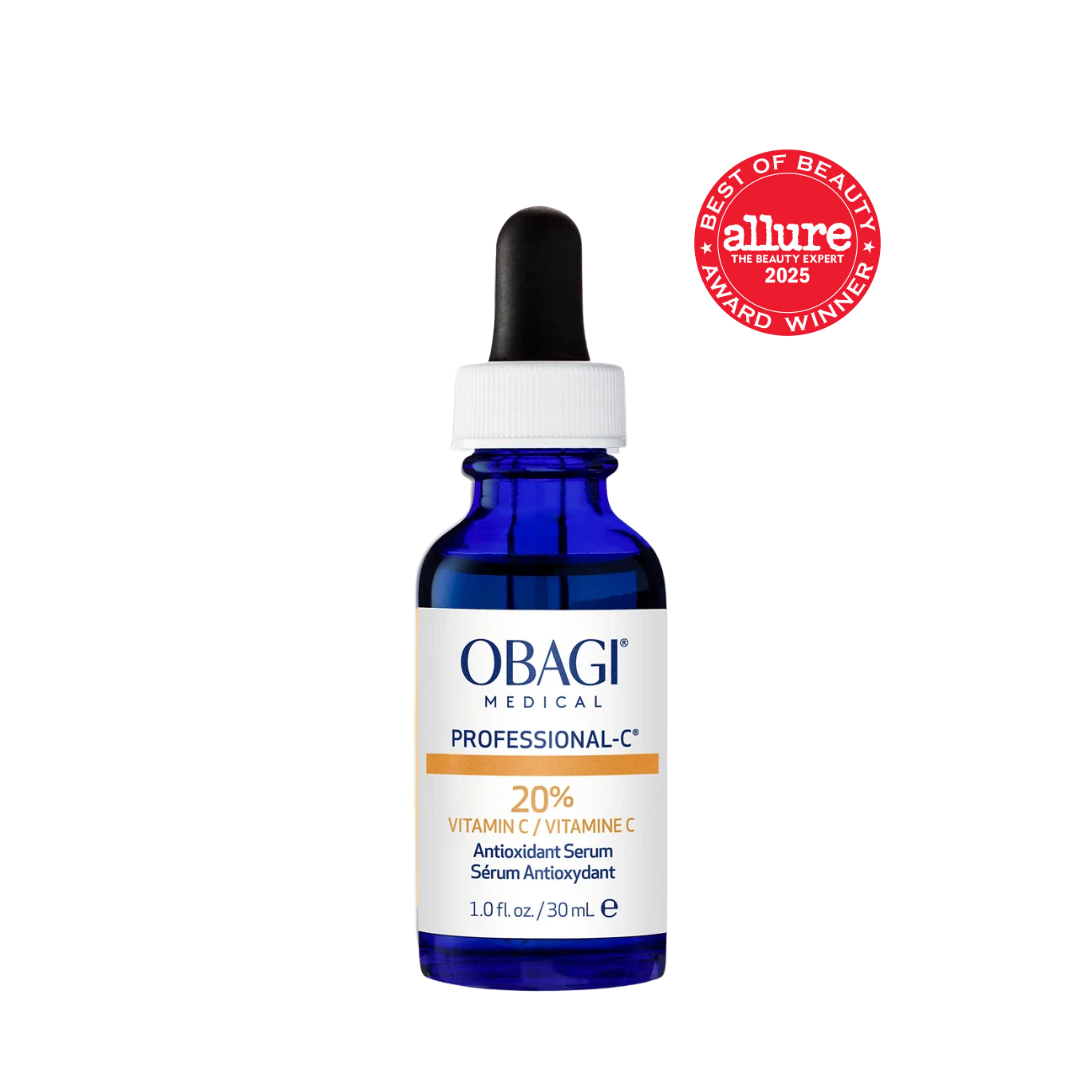
Professional-C 20%
Higher-concentration L-ascorbic acid formula positioned toward normal-to-oily skin.
| Product | L-Ascorbic Acid | Manufacturer's Primary Skin-Type Positioning | Current 1 oz Price |
|---|---|---|---|
| Professional-C Serum 10% | 10% | Dry or sensitive skin | $115 |
| Professional-C Serum 15% | 15% | Normal to combination skin | $130 |
| Professional-C Serum 20% | 20% | Normal to oily skin | $155 |
All three are positioned toward antioxidant care and visible concerns such as uneven tone and signs of photoaging.
The right formula depends on more than concentration.
When Is 10% the Better Choice?
Professional-C 10% may be more suitable when a shopper wants a lower-strength introduction to L-ascorbic acid.
It may also appeal to people whose skin feels dry or uncomfortable with more concentrated corrective products.
Someone who has successfully used the 10% serum for an extended period may decide to continue with it rather than move upward.
The fact that Obagi sells stronger formulations doesn't mean the 10% product is incomplete.
A lower concentration can still serve a meaningful antioxidant purpose.
When Does 15% Make More Sense?
Obagi Professional-C Serum 15 is positioned toward normal-to-combination skin.
It provides an intermediate concentration of L-ascorbic acid.
Someone who has previously tolerated vitamin C skincare and wants to investigate a more concentrated formula may consider it.
However, the 15% formula also has a different supporting ingredient list.
That means switching shouldn't be treated as a simple increase in the same product.
It contains denatured alcohol, ascorbyl glucoside, citrus extracts, and fragrance components, among other ingredients.
Individuals with known sensitivities should review the complete formulation before changing products.
Who Should Consider 20%?
Obagi Professional-C Serum 20 contains the highest L-ascorbic acid concentration in the three daily serums.
Obagi primarily recommends it for normal-to-oily skin.
That positioning makes it worth evaluating for someone who already tolerates concentrated vitamin C skincare and whose skin preferences align with its formulation.
However, a higher percentage doesn't establish that every person will experience better wrinkle reduction or brighter skin.
The 20% product also has its own ingredient list and application characteristics.
It should be selected because it suits the intended routine, not because the highest concentration appears to offer the best value.
Is Higher Vitamin C Concentration Always Better?
No.
Vitamin C concentration is one factor in a much larger formulation system.
Obagi itself emphasizes the importance of ingredient form, pH, stability, and the overall formulation environment.
L-ascorbic acid requires careful formulation because it can degrade under unsuitable conditions.
Two products containing different concentrations may therefore perform differently for reasons beyond the percentages on their packaging.
Higher concentration can also affect tolerability.
A serum that causes recurring irritation may be difficult to apply consistently, reducing its practical usefulness.
The best choice is a formula that addresses the intended concern without creating unnecessary discomfort.
Do You Have to Work Your Way Up to 20%?
There is no requirement to progress from 10% to 15% and eventually to 20%.
Someone who uses Professional-C 10% comfortably and is satisfied with the results may prefer to stay with it.
Similarly, someone already using 15% does not automatically need the strongest formula.
Increasing concentration is a choice based on individual needs, not a mandatory skincare milestone.
The presence of three strengths gives shoppers options rather than an obligation to use all of them.
How to Choose
10%: Consider when dry or sensitive skin and a more conservative concentration are priorities.
15%: Consider when your skin is normal to combination and you want to evaluate an intermediate concentration.
20%: Consider when your skin is normal to oily and you are comfortable with more concentrated vitamin C skincare.
There is no obligation to increase strength when the current formula works well.
What Do Customer Reviews Say About Obagi Professional-C 10%?
Customer reviews can help explain how a product feels in everyday use, particularly details that aren't apparent from an ingredient list.
Current feedback for Professional-C 10% is generally favorable, but it should be evaluated with appropriate context.
DermAvenue's product page currently displays an average rating of approximately 4.88 out of 5 from 17 reviews.
Obagi's own website reports approximately 4.1 out of 5 from 60 reviews.
These are separate customer-review collections rather than independent clinical studies.
Commonly Reported Positives
Positive DermAvenue reviews include reports of smoother-feeling skin, improved-looking brightness, and general satisfaction with the product.
One reviewer specifically mentions choosing the 10% concentration because of sensitive skin and being pleased with the experience.
That observation is relevant to the serum's manufacturer positioning.
Other buyers describe repeat purchasing or satisfaction with Obagi skincare more generally.
These experiences can be useful when considering the product's appeal.
However, they cannot establish that everyone will tolerate the formula or see similar cosmetic results.
A person reporting brighter skin may also be using sunscreen, retinol, moisturizers, or other treatments.
Customer feedback doesn't isolate the effect of the serum from the rest of the routine.
Common Complaints and Considerations
The manufacturer's review average is lower than DermAvenue's, illustrating why a single rating shouldn't be treated as a definitive measure of product quality.
A shopper should examine the substance of individual reviews, including comments about fragrance, application experience, tingling, and whether visible results met expectations.
Some people may dislike the serum's scent or find that an acidic vitamin C formula causes discomfort.
Packaging and product condition also matter because L-ascorbic acid is sensitive to degradation.
Not every negative experience establishes a defect, just as a favorable review doesn't prove the product will work for everyone.
The most useful question is whether the feedback addresses concerns relevant to the reader's own skin and routine.
How Much Weight Should You Give Reviews?
Customer reviews are valuable for evaluating personal experiences.
They are less reliable for determining clinical effectiveness.
A report of improved radiance does not establish how much the product independently contributed to that change.
Likewise, a single report of irritation doesn't mean the formula is unsuitable for everyone.
Reviews should be considered alongside current ingredient information, manufacturer directions, individual skin concerns, and the evidence supporting topical vitamin C.
Reasons Buyers May Like It
Lower concentration, antioxidant skincare, visible radiance goals, and suitability for some users seeking a gentler vitamin C routine.
Potential Drawbacks
Fragrance, possible tingling, individual reactions, premium price, and results that may differ from customer expectations.
How to Use Obagi Professional-C Serum 10% in Your Morning Routine
Obagi recommends Professional-C 10% as a morning antioxidant treatment.
Its application instructions are straightforward, making it relatively easy to incorporate into an established routine.
When Should You Apply It?
Apply the serum in the morning after cleansing and toning, if a toner is part of the routine.
The product is intended to be used before moisturizer.
This allows the vitamin C treatment to occupy a dedicated step without requiring additional corrective serums.
Someone who doesn't normally use a toner doesn't need to purchase one solely to use Professional-C 10%.
The important considerations are following the product directions and maintaining a comfortable routine.
How Many Drops Should You Use?
Obagi recommends applying five to seven drops in the morning.
Use the serum according to the packaging directions and avoid direct contact with the eyes, nose, mouth, and lips.
Applying substantially more than directed doesn't guarantee better results.
It may cause unnecessary product waste or discomfort.
Someone new to L-ascorbic acid should pay attention to how their skin responds rather than assuming that additional serum will produce faster improvements.
Can You Use It With Retinol?
Vitamin C and retinol can have complementary roles in skincare.
A common arrangement is vitamin C in the morning and retinol at night.
This provides a practical way to separate treatments that can both cause irritation in some users.
It doesn't mean the combination is necessary for everyone.
Someone introducing vitamin C for the first time may prefer to establish tolerance before adding retinol.
Likewise, a person already experiencing dryness or irritation from retinol may need to simplify the routine before introducing another active product.
Should You Follow With Moisturizer?
Yes, a suitable moisturizer can be useful, particularly for people with dry skin.
Obagi recommends applying Professional-C 10% before moisturizer.
The moisturizing product should be selected according to skin needs rather than the assumption that a vitamin C serum requires a specific matching cream.
For someone with dry skin, a comfortable moisturizer may make the morning routine more manageable.
For someone whose skin is naturally oilier, a lighter texture may be preferable.
Why Sunscreen Is Still Necessary
The final morning step should be an appropriate broad-spectrum sunscreen.
SPF 30 or higher is a sensible baseline for daily use, with reapplication according to the product directions.
Vitamin C provides antioxidant support, but it does not replace UV filters.
A serum can't be relied on to prevent sunburn or provide the same protection as sunscreen.
Daily sun protection also matters when trying to improve the appearance of discoloration and photoaging.
Simple Morning Application Order
Cleanse
Use a suitable facial cleanser and gently dry the skin.
Apply Professional-C 10%
Follow the current product directions for the amount and application areas.
Moisturize
Choose a moisturizer that suits your skin's comfort and hydration needs.
Protect With Sunscreen
Finish with broad-spectrum SPF 30 or higher.
How to Store Obagi Professional-C 10% and Prevent Product Waste
L-ascorbic acid can be sensitive to environmental conditions.
That makes storage particularly important for people purchasing a premium vitamin C serum.
Why L-Ascorbic Acid Stability Matters
Vitamin C can undergo oxidation and other degradation processes, depending on the formulation and storage environment.
Light, heat, oxygen exposure, and the complete formula can all influence stability.
Manufacturers use different formulation approaches to help manage these challenges.
The concentration on the label doesn't by itself establish how long a serum will remain suitable for use.
Following the manufacturer's storage instructions is therefore part of using the product appropriately.
Obagi's Storage Recommendations
Obagi recommends storing Professional-C Serum 10% at a controlled temperature not exceeding 77°F, or 25°C.
The brand also advises keeping the product away from direct sunlight and storing it in a cool, dark place after opening.
The cap should remain tightly closed when the product is not in use.
Avoid leaving the bottle in a hot car, near a sunny window, or in other environments where temperatures may rise substantially.
These precautions are especially relevant in warm climates.
How Long Should an Open Bottle Last?
Obagi recommends using the serum within three to six months of first opening.
This guidance helps shoppers consider how consistently they will use the product.
Someone who applies vitamin C only occasionally may find that a smaller bottle is more practical than purchasing a full-size serum that remains open for an extended period.
Obagi also offers a smaller 0.42 oz format through its own product range.
Available sizes and prices should be checked at the retailer before purchasing.
What If the Serum Changes Color?
Color changes can occur in some L-ascorbic acid formulations as they age or undergo chemical changes.
However, appearance alone cannot reliably establish the exact degree of degradation or whether a particular bottle remains suitable.
A slight color change should not automatically be described as proof that all benefits have disappeared.
Conversely, substantial discoloration, unusual odor, damaged packaging, or other concerning changes should not be dismissed.
Follow the manufacturer's recommended period after opening and contact the retailer or manufacturer when there is uncertainty about a bottle's condition.
Keep It Cool
Follow the recommended storage temperature and avoid heat exposure.
Limit Light Exposure
Store away from direct sunlight and close the bottle tightly.
Monitor Product Age
Follow the recommended use period after first opening.
Obagi Professional-C 10% Price: Is It Worth $115?
DermAvenue currently lists Professional-C 10% at $115 for the 1 fl oz bottle.
That places it firmly within premium vitamin C skincare.
The price deserves consideration because vitamin C is generally intended for regular use, creating an ongoing purchasing decision rather than a one-time expense.
How Does Its Price Compare With the Stronger Formulas?
The current DermAvenue prices are:
| Formula | Listed Price | Difference From 10% |
|---|---|---|
| Professional-C 10% | $115 | — |
| Professional-C 15% | $130 | $15 more |
| Professional-C 20% | $155 | $40 more |
The relatively small price increase between 10% and 15% may tempt shoppers to choose the intermediate product automatically.
However, paying $15 more doesn't establish that 15% is the better concentration for their skin.
The differences in formulation and intended skin type deserve more attention than the price gap alone.
Prices and promotions may change, so check the current product listings before ordering.
What Are You Paying For?
Professional-C 10% is positioned as a premium L-ascorbic acid antioxidant treatment.
The product reflects Obagi's vitamin C formulation approach, including consideration of ingredient concentration, delivery, and stability.
The brand also offers different concentrations to align with different skin types.
These factors may make the product appealing to someone who values an established professional skincare brand.
However, price alone doesn't establish that Professional-C 10% outperforms every less expensive vitamin C serum.
The complete formulation and individual response remain important.
When Is 10% a Worthwhile Purchase?
Professional-C 10% may be a reasonable investment for someone who wants a lower-concentration L-ascorbic acid serum and already has a comfortable basic skincare routine.
It may be particularly relevant for shoppers whose main concerns are dullness, uneven-looking tone, and early signs of photoaging.
If the product is well tolerated, its concentration may make it a suitable long-term choice without requiring a move to 15% or 20%.
The value is less compelling when someone is buying it solely because Obagi is a premium brand.
There should be a specific skincare need behind the purchase.
When Might Another Vitamin C Serum Be Better?
Someone with a known fragrance allergy may prefer a formula without added fragrance.
A shopper who already tolerates another vitamin C serum and is satisfied with its results may not need to switch.
Someone with substantial dryness may benefit more immediately from upgrading their moisturizer.
And a person whose main concern is persistent pigmentation may require a different treatment approach.
The best vitamin C serum isn't necessarily the most expensive or most concentrated option. It is the formula that serves the intended purpose without creating unnecessary problems.
Find Your Professional-C Formula
Compare Obagi's vitamin C concentrations or explore the lower-strength Professional-C 10% serum at DermAvenue.
Shop Obagi Professional-C Serum 10%Common Mistakes When Choosing or Using Professional-C 10%
| Common Mistake | Better Approach |
|---|---|
| Assuming 10% vitamin C is too weak to be useful | Evaluate the complete formulation and intended benefits |
| Assuming a lower concentration cannot irritate skin | Consider acidity, fragrance, and individual tolerance |
| Ignoring fragrance ingredients | Review the complete ingredient list, especially with known allergies |
| Automatically moving to 20% | Increase concentration only when there is a meaningful reason |
| Applying more than directed | Follow Obagi's recommended application amount |
| Introducing several new active treatments together | Add products thoughtfully and monitor skin response |
| Using vitamin C instead of moisturizer | Treat antioxidant care and moisturizing as separate functions |
| Skipping sunscreen | Maintain consistent broad-spectrum UV protection |
| Storing the bottle in heat or sunlight | Follow Obagi's storage guidance |
| Expecting dramatic results immediately | Allow for gradual cosmetic changes without guaranteed timelines |
Frequently Asked Questions About Obagi Professional-C 10%
Is Obagi Professional-C 10% Good for Sensitive Skin?
Obagi recommends Professional-C 10% for dry or sensitive skin, making it the lower-strength option in the brand's daily vitamin C serum collection.
However, the formula contains fragrance and can cause tingling.
Some people with sensitive skin may tolerate it comfortably, while others may react to the acidic vitamin C formulation or supporting ingredients.
Someone with a known fragrance allergy should consider the ingredient disclosure carefully.
The manufacturer's skin-type recommendation is a useful starting point, but it isn't a guarantee of individual tolerance.
Persistent or severe irritation should prompt discontinuation and appropriate professional advice.
Is 10% Vitamin C Strong Enough to Work?
A 10% L-ascorbic acid concentration can be meaningful in topical skincare.
Vitamin C has antioxidant properties and has been studied for its relevance to visible photoaging and uneven-looking tone.
However, concentration is only one part of formulation performance.
The serum's pH, stability, delivery, and supporting ingredients all affect how the product functions.
A higher percentage doesn't automatically produce proportionately greater results.
Someone who tolerates Professional-C 10% and is satisfied with its cosmetic effects may have no reason to purchase a stronger formula.
What's the Difference Between Obagi Professional-C 10%, 15%, and 20%?
The three products contain different concentrations of L-ascorbic acid.
Professional-C 10% is positioned toward dry or sensitive skin.
Professional-C 15% is intended primarily for normal-to-combination skin.
Professional-C 20% is recommended for normal-to-oily skin.
The differences also extend to their supporting ingredient lists.
For example, the 15% and 20% formulas contain additional components not found in the current 10% ingredient list.
This means shoppers should evaluate both concentration and complete formulation rather than assume the three serums differ only in strength.
Can You Use Obagi Professional-C 10% Every Day?
Obagi recommends daily morning use.
The instructions specify applying five to seven drops after cleansing and toning, before moisturizer and sunscreen.
Someone who tolerates the product comfortably may incorporate it into a consistent daily routine.
However, individual reactions vary.
People introducing vitamin C for the first time may wish to monitor their tolerance carefully and avoid adding several other active treatments simultaneously.
If tingling becomes severe, Obagi advises stopping use and consulting a doctor.
Using more product or applying it more frequently than directed does not guarantee better results.
How Long Does Obagi Professional-C 10% Take to Show Results?
The timing of visible results depends on the concern being addressed, the person's skin, and the other products used in the routine.
Some customers report noticing changes in radiance or smoothness, but individual reviews cannot establish a universal timeframe.
More substantial changes in the appearance of fine lines or uneven tone may require consistent use over time.
Obagi does not establish a single guaranteed timeline applicable to every user of Professional-C 10%.
A person evaluating the serum should consider realistic cosmetic goals rather than expecting immediate dramatic changes.
If the product repeatedly causes discomfort, continuing solely to reach an anticipated results milestone may not be appropriate.
Final Verdict: Who Should Choose Obagi Professional-C 10%?
Obagi Professional-C Serum 10% offers a lower-concentration L-ascorbic acid option for shoppers who want antioxidant skincare without immediately moving to the brand's stronger formulas.
Its principal appeal is to people with dry or sensitive skin who prefer a more conservative vitamin C concentration and whose skin tolerates the complete ingredient list.
The 10% formula can serve a meaningful purpose in a routine focused on antioxidant care, dullness, uneven-looking tone, and visible signs of photoaging.
However, its limitations deserve equal attention.
The product contains fragrance, it may cause tingling, and its $115 price doesn't automatically establish superior performance to every alternative.
Professional-C 15% and 20% offer other concentrations for shoppers whose skin types and preferences align with those formulations. Neither should be considered a mandatory upgrade.
For someone whose skin is comfortable with Obagi Professional-C 10, remaining at that concentration may be the most sensible long-term choice.
The right vitamin C serum should support the routine rather than make it harder to maintain.
Explore Obagi Professional-C Serum 10%
Review the lower-concentration Professional-C formula or explore DermAvenue's complete Obagi collection to find the right skincare products for your routine.
Shop Professional-C 10%More About Obagi and Vitamin C Skincare
Obagi Skincare Review
Explore Obagi's wider range of skincare products and their intended benefits.
Glow That Lasts: The Power Pairings of Obagi Professional-C
Learn how the higher-concentration Professional-C serum fits into a skincare routine.
Is Topical Vitamin C Worth the Hype?
A closer look at topical vitamin C and its role in everyday skincare.
Vitamin C + Red Light Therapy: The Science Behind a Brighter Complexion
Discover additional ways vitamin C appears in modern skincare routines.


